Let's Chat About Your Project!
We’d love to hear about your goals and objectives! Let’s schedule a friendly consultation to discuss how we can craft the perfect solution just for you. Rest assured, all your information will be kept confidential.


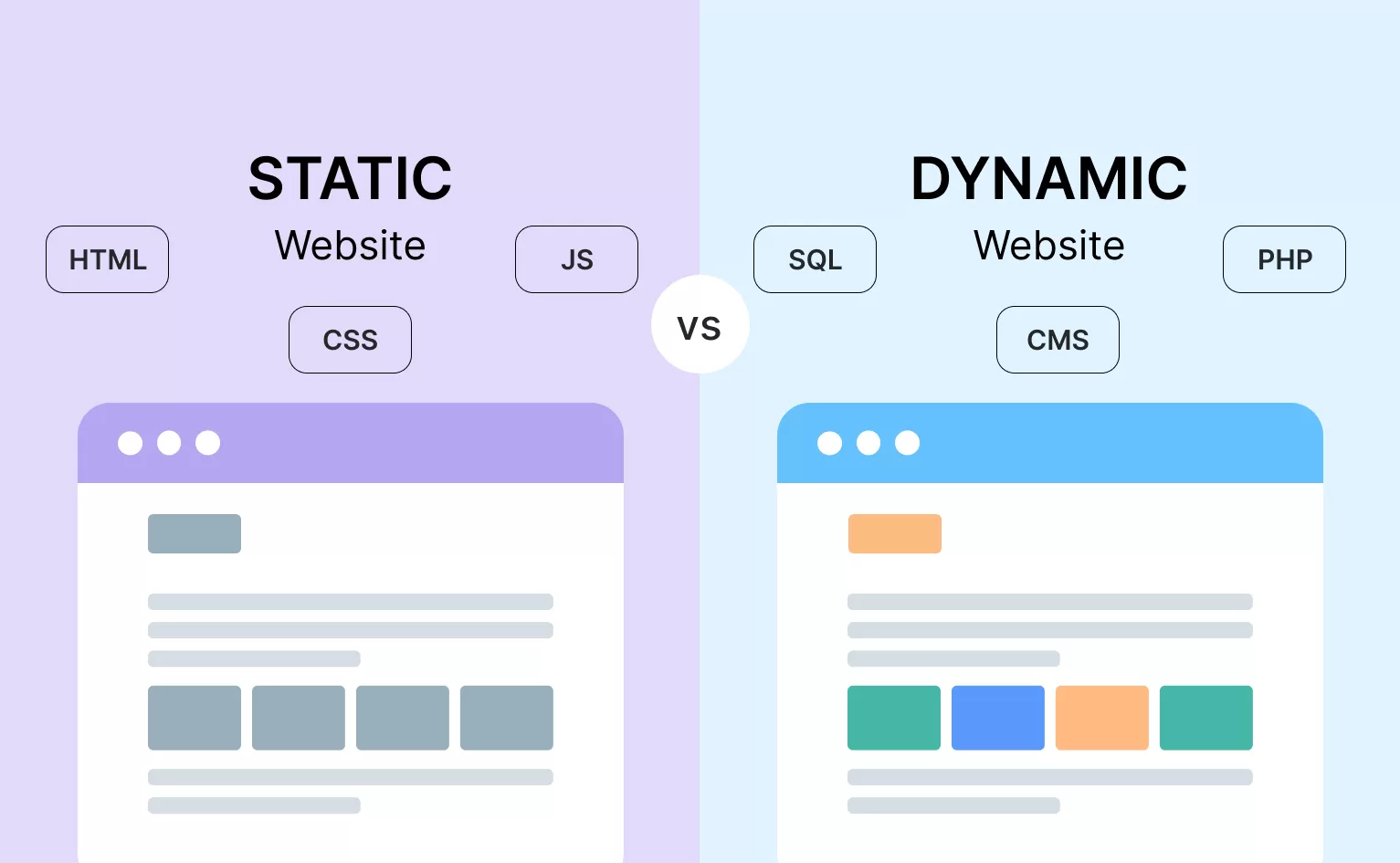
Ever wondered why some websites load instantly while others change content every time you visit? The answer lies in the fundamental difference between static and dynamic website structures.Some sites are built with simple, fixed content that always stays the same because it is hardcoded, while others are capable of updating and changing their content regularly.
Understanding the static vs dynamic website debate is more important than ever as businesses race to establish their online presence. I have seen countless entrepreneurs make the wrong choice simply because they didn’t understand these basic concepts. This blog will break down the difference between static and dynamic website options, explore their pros and cons, and help you decide which one fits your business needs perfectly.
A static website is like a digital brochure that displays the same information to every visitor. Think of it as a collection of simple HTML/CSS files that sit on a server, waiting to be viewed. When someone visits your static site, their browser downloads these files and displays them exactly as they were created.
The content remains unchanged unless someone manually edits the code. There’s no fancy database pulling information or scripts running in the background. What you see is literally what you get: the same content for every visitor, every time they visit.
These websites are fast and lightweight because they don’t need to process any complex operations. The server simply sends the pre-built pages to visitors’ browsers, making the whole process incredibly efficient.
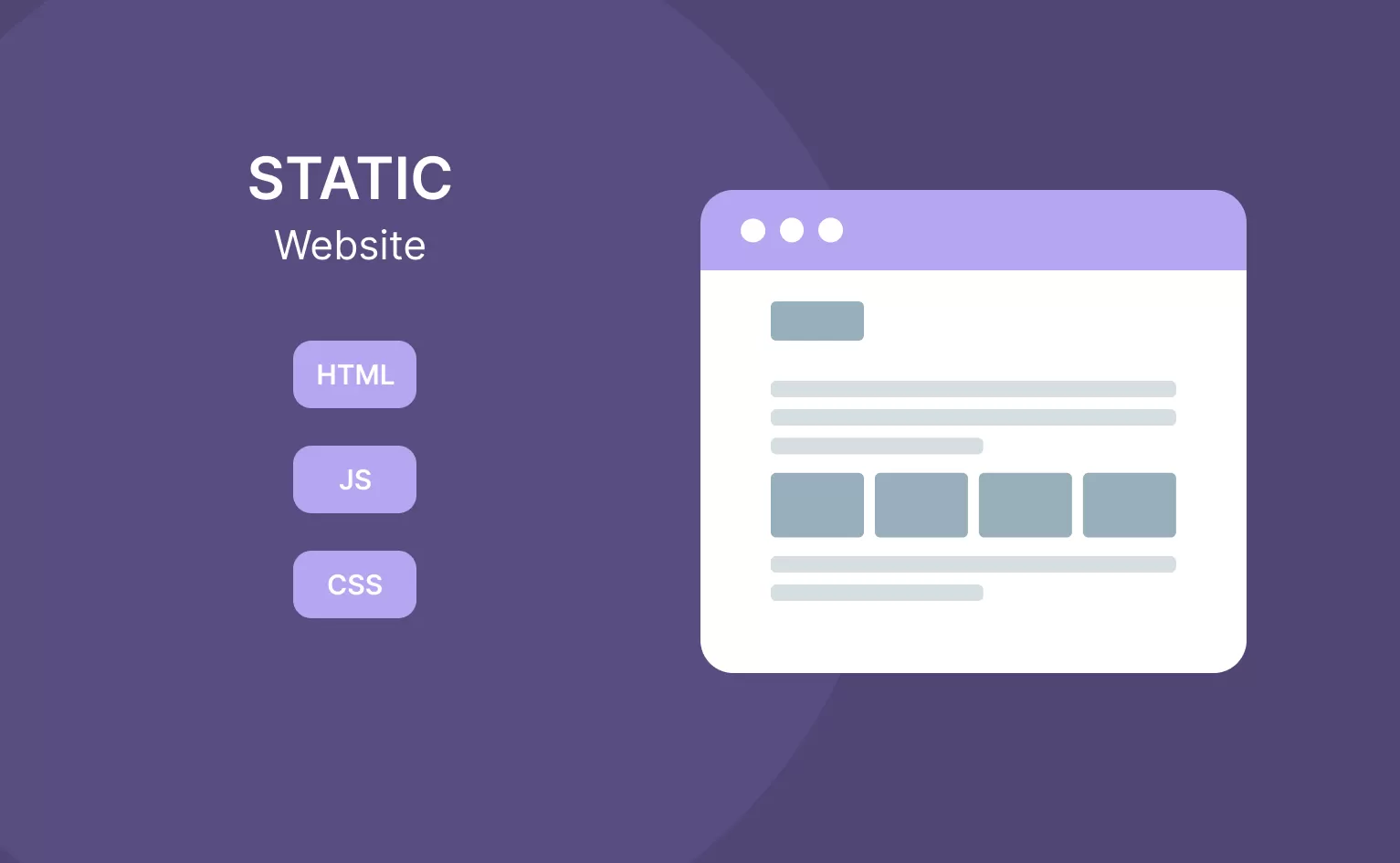
Static websites load remarkably fast because there’s no waiting for databases or server-side processing. I remember working with a client whose static portfolio site loaded in under one second, while their competitor’s dynamic site took nearly four seconds. That three-second difference can make or break user engagement
Building a static website typically costs significantly less because developers don’t need to create complex backend systems or integrate databases.
With fewer moving parts, static websites have fewer vulnerabilities. There are no databases to hack, no user authentication systems to breach, and no server-side scripts to exploit. It’s like having a simple lock versus a complex security system – sometimes simpler is actually safer.
Every content change requires editing HTML files directly or asking a developer for help. I have watched business owners struggle to update their hours of operation because they couldn’t navigate the code. This becomes frustrating when you need to make frequent changes.
Static websites can’t handle user logins, shopping carts, or personalized content. You can’t build a social media platform or e-commerce store with static technology alone. The functionality is restricted to displaying information rather than creating interactive experiences.
Dynamic websites are like smart assistants that adapt their content based on who’s visiting and what they’re doing. These sites use programming languages like PHP and JavaScript, or content management systems like WordPress, to create pages on the fly.
Content changes dynamically based on user actions or database queries. When you log into Facebook, the system pulls your specific friend list, recent posts, and personalized ads from various databases to create a unique homepage just for you.
The website development process for dynamic sites involves creating templates and connecting them to databases, rather than building individual pages manually.

Content management systems make updates simple for non-technical users. You can add blog posts, update product information, or change your contact details through user-friendly interfaces. It’s like having a word processor for your website instead of needing to edit raw code.
Dynamic sites can remember user preferences, display relevant recommendations, and create personalized experiences. Amazon shows you products based on your browsing history, while Netflix suggests movies you might enjoy. This level of customization keeps users engaged and coming back.
These websites can grow with your business. You can add new features, integrate third-party services, and handle increasing amounts of content without rebuilding everything from scratch.
Dynamic sites require more planning, development time, and ongoing maintenance. The initial investment and monthly hosting costs are typically higher because you need more powerful servers and technical expertise.
These websites need servers that can handle database queries and server-side processing. Basic shared hosting often isn’t sufficient, so you’ll need more expensive hosting solutions to ensure good performance.
All that database querying and content generation takes time. Without proper optimization techniques like caching and content delivery networks, dynamic sites can feel sluggish compared to their static counterparts.
Static websites win the speed battle hands down. They’re faster because there’s no database to query, no scripts to process, and no content to generate. The server simply sends pre-built files to visitors.
Dynamic websites offer richer functionality but at the cost of speed. However, with proper optimization techniques, the performance gap can be minimized while maintaining all the interactive features.
Static websites work better for small projects with limited content that doesn’t change frequently. They’re perfect for portfolios, small business sites, and landing pages that serve a specific purpose.
Dynamic websites are scalable for businesses and applications that need to grow. They can handle thousands of products, millions of users, and complex workflows that would be impossible with static technology.
Static websites have fewer vulnerabilities simply because there are fewer attack vectors. No database means no SQL injection attacks. No user authentication means no password breaches.
Dynamic websites need extra security measures like regular updates, secure coding practices, and robust authentication systems. The complexity creates more opportunities for security issues, but proper implementation can make them just as secure.
The website development process differs significantly between static and dynamic options. Static sites have lower upfront costs and minimal maintenance requirements, while dynamic sites cost more initially but offer greater long-term flexibility and functionality.
Many business owners often ask, “how much does website development cost?” The answer depends on whether you choose static or dynamic. Static sites might save money upfront, but if you need frequent updates, the cost of paying developers for each change can add up quickly. Dynamic sites cost more initially but allow you to make changes yourself without constant developer support.
Small businesses, portfolios, and landing pages are perfect candidates for static websites. If you’re a freelance photographer showcasing your work, a local restaurant displaying your menu, or a consultant highlighting your services, static might be your best choice
Limited updates needed is another key indicator. If your content changes only a few times per year, the simplicity and speed of static sites outweigh the inconvenience of manual updates.
I worked with a law firm that chose a static site because their practice areas and attorney information rarely changed. They valued the fast loading speed and low maintenance over the ability to make frequent updates.
E-commerce, blogs, and membership sites absolutely need dynamic functionality. You can’t process payments, manage user accounts, or publish regular content effectively with static technology.
Requires frequent updates and user interactivity is the clearest sign you need a dynamic solution. If customers need to log in, make purchases, leave comments, or interact with your content, dynamic is the only viable option.
Consulting a web design and development agency can help you decide between these options based on your specific needs, budget, and long-term goals. They can assess your requirements and recommend the best approach for your situation.
The main difference between static and dynamic website technology comes down to complexity versus simplicity. Static sites offer speed, security, and cost-effectiveness for straightforward projects. Dynamic sites provide flexibility, interactivity, and scalability for complex business needs.
Both approaches have unique advantages that make them perfect for different situations. The key is honestly assessing your current needs while considering future growth plans.
Remember that you can always upgrade from static to dynamic later, but it’s harder to go in the reverse direction.
If you’re still unsure which is best for your business, contact Teqdeft today. Our team specializes in helping businesses with tailored web solutions that match your specific goals and budget
The main difference is that a static website displays the same content for all users, while a dynamic website changes content based on user interaction, database, or backend logic.
We’d love to hear about your goals and objectives! Let’s schedule a friendly consultation to discuss how we can craft the perfect solution just for you. Rest assured, all your information will be kept confidential.
Speak to our friendly team via live chat
Chat to us in person at our Punjab HQ


